
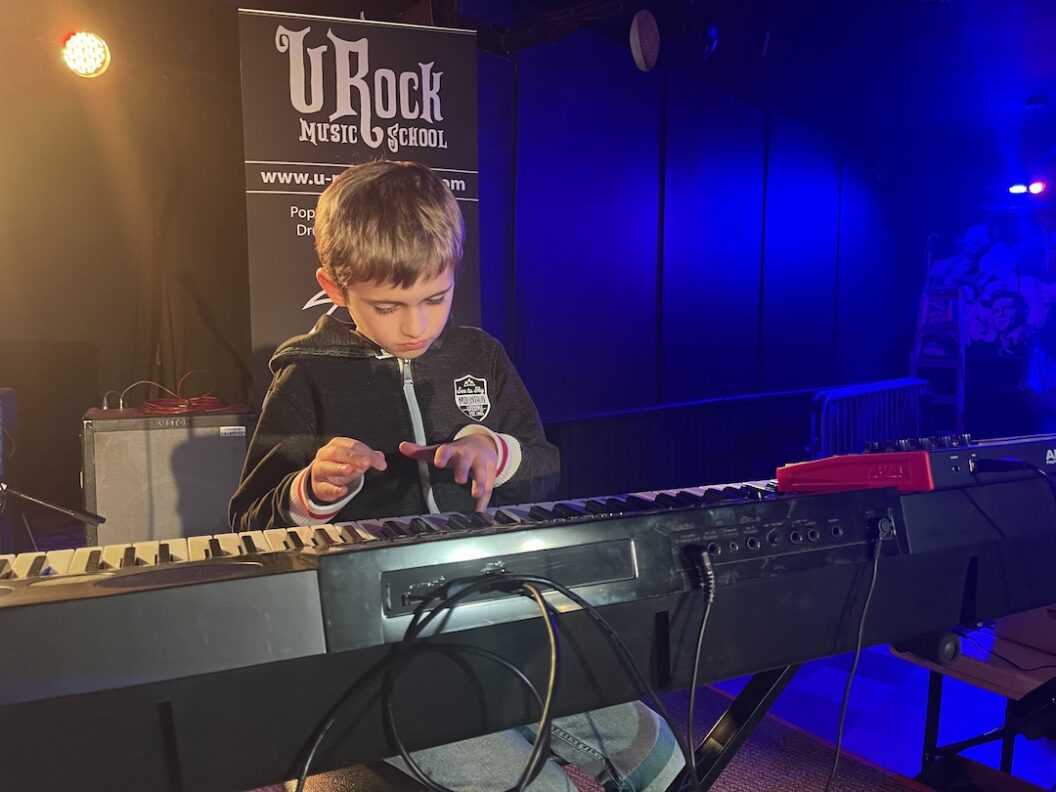
Group music lessons are truly fantastic for kids and teens, offering a unique blend of benefits that sometimes even go beyond what private lessons can provide. While one-on-one instruction offers personalized attention, group settings bring a whole other dimension of learning and fun.
We’re excited to announce two new groups, for piano and guitar beginners:
Guitar Club
Looking for a super fun and chill way for your kids or teens to dive into the world of guitar? Our group lessons are all about making music an awesome adventure, not a chore. Imagine your child learning their favorite songs alongside other kids, laughing, sharing ideas, and maybe even forming their first band – all in a supportive, no-pressure environment. It’s a fantastic way to boost their confidence, spark their creativity, and connect with new friends who share their passion for music. We focus on making learning enjoyable, so they’ll be strumming out tunes and having a blast in no time!
Ages 10-12
Tuesdays at 4:30 pm to 5:00 pm starting September 9
Piano Stars
Is your child curious about the piano but you’re looking for a fun, low-key way for them to explore it? Our group piano lessons are perfect for kids and teens who want to learn in a relaxed and social setting. Imagine them discovering melodies and chords alongside new friends, sharing “aha!” moments, and maybe even performing a duet or two – all without the pressure of a super formal environment. It’s a fantastic way for them to build confidence, unleash their creativity, and connect with other young musicians. We keep things engaging and enjoyable, so they’ll be making music and having a blast in no time!
Ages 8-10
Mondays at 5:00 pm to 5:30 pm starting September 9
Why take group lessions?
Here’s a breakdown of the many advantages of kids and teens taking music lessons in a group:
I. Social & Emotional Superpowers
- Teamwork and Collaboration: This is huge! In a group, kids aren’t just playing their own part; they’re learning to be part of a musical team. They have to listen to each other, adjust their timing and dynamics, and work together to create a cohesive sound. This is a real-life lesson in collaboration that’s invaluable for school projects, sports teams, and future careers.
- Enhanced Communication Skills: Music is a form of communication, and in a group setting, kids learn both verbal and non-verbal cues. They learn to listen actively, respond to what others are doing, and even convey emotions through their playing or singing. When discussing a piece, they practice articulating their thoughts and respecting diverse interpretations.
- Boosted Confidence (with less pressure): For some kids, the intense spotlight of a private lesson can be a bit intimidating. In a group, the pressure is shared. They can feel more comfortable making mistakes because everyone is learning together. As they contribute to a great group sound, their confidence grows in a supportive, encouraging environment. Performing together in front of others (even just the class) helps them overcome performance anxiety in a less daunting way.
- Empathy and Connection: Music is deeply emotional. When playing or singing with others, kids learn to connect with the emotions of the music and, by extension, the emotions of their peers. They develop empathy by trying to understand how their part fits into the whole and how it contributes to the overall feeling of the piece. This shared experience creates strong bonds and a sense of belonging.
- Motivation through Peers: There’s a wonderful ripple effect in a group. Seeing a classmate master a tricky part or getting positive feedback from their peers can be incredibly motivating. A little healthy competition can also spur them on to practice more diligently and strive for excellence.
- Sense of Community: Group lessons foster a unique sense of camaraderie. Kids and teens meet others who share their passion for music, often leading to lasting friendships. This shared journey creates a supportive community where they can cheer each other on.
- Fun and Engagement: Let’s face it, learning is often more fun with friends! Group classes can incorporate games, interactive activities, and ensemble playing that simply aren’t possible in a one-on-one setting. This keeps kids engaged and makes the learning process feel less like “work” and more like play.
II. Cognitive & Musical Gains
- Deeper Understanding of Musicality: While private lessons build individual technique, group lessons teach “ensemble skills.” Kids learn how to blend their sound, balance their volume with others, and understand the dynamics of playing within a larger musical structure. This develops a more holistic understanding of how music works.
- Improved Listening Skills: To play effectively in a group, a musician must become an expert listener. They need to hear their own part, but also everyone else’s part, ensuring they are in tune, in time, and blending well. This active listening translates to improved attentiveness in other areas of life.
- Exposure to Diverse Styles and Parts: In a group setting, students might be exposed to different musical parts or instruments they wouldn’t encounter in a solo lesson. They might play harmony lines, rhythmic counterpoints, or different accompaniment styles, broadening their musical horizons.
- Enhanced Learning Experience: Lessons are often reinforced multiple times in a group setting – hearing explanations from the instructor, seeing peers demonstrate, and then trying it themselves. This multi-faceted approach can aid retention.
- More Opportunities for Performance: Group lessons often culminate in mini-performances or recitals as an ensemble. This provides regular, low-pressure opportunities to perform and share their progress, building stage presence and reducing performance anxiety over time.
III. Practical & Financial Considerations (Especially in Canada)
- Often More Affordable: Generally, group music lessons tend to be less expensive per hour than private lessons. This can make music education more accessible for many families in Canada.
- Structured Yet Flexible: Group classes often follow a consistent curriculum and routine, which can be beneficial for kids who thrive on predictability. While the pace is set for the group, a good teacher will still find ways to engage students at different levels within the group.
- Introduces Musical Roles: Kids learn that every instrument and every part has a specific role in creating the overall sound. They appreciate how the bass grounds the harmony, how the drums provide the pulse, how a melody carries the tune, and how harmonies add richness.
While private lessons definitely have their place for highly individualized instruction and rapid technical progress, group music lessons offer a powerful and unique set of social, emotional, and musical benefits that are incredibly valuable for the holistic development of children and teens. They truly embody the idea that music is meant to be shared. If you are interested in group piano lessons or group guitar lessons for your child, and are in the Kanata or Stittsville area, contact us today!